As a therapist, one of the most common things I hear from women is, “I don’t feel like myself anymore.”
Sometimes this feeling begins during pregnancy or motherhood. For others, it appears during perimenopause or menopause, when hormonal changes overlap with changing relationships, careers, and caregiving responsibilities.
Although motherhood and menopause may look like very different stages, they have something important in common: both are major life transitions that can reshape a woman’s identity, relationships, priorities, and emotional well-being.
Biological changes, social expectations, family responsibilities, past experiences, and access to support can all influence a woman’s mental health. Research shows that pregnancy and early motherhood may increase vulnerability to anxiety, depression, and emotional strain (Ekelöf et al. 2025).
Understanding these effects can make life transitions feel less isolating and help women navigate change with greater self-compassion and support.
The Transition to Motherhood: A Major Psychological Shift
Motherhood can bring connection, meaning, and love, but it is also one of the most significant identity transitions a person can experience.
The perinatal period—pregnancy and the first year after birth—involves hormonal, physical, emotional, and social changes that can increase vulnerability to anxiety and depression (Ekelöf et al. 2025).
Canadian research identifies perinatal depression as a common pregnancy complication that may also affect relationships, daily functioning, and family life (Wolak, Letourneau, and Hayden 2025).
Motherhood can change a woman’s:
- Sense of self
- Relationships and partnership dynamics
- Career identity
- Sleep and physical health
- Body image
- Social life
- Emotional regulation and stress tolerance
Even when motherhood is deeply wanted, having one’s time and energy revolve around someone else can feel overwhelming. A mother may love her child while grieving parts of her previous life. She may feel grateful and exhausted, fulfilled and isolated, or confident and uncertain at once. These feelings reflect the complexity of transition – not a failure to appreciate motherhood.
A woman’s adjustment may also reflect her childhood and available support. Among first-time mothers, adverse childhood experiences were associated with greater concerns about motherhood, including combining a maternal identity with other parts of the self (Mathijssen, Dirks, and van Bakel 2024).
Leaving or pausing work, limited finances, childcare constraints, physical recovery, and a lack of community can make motherhood isolating, potentially contributing to anxiety, depression, and reduced social confidence.
The Mental Load and Emotional Labour of Motherhood
One of the most significant contributors to maternal stress is the “mental load”: the largely invisible work involved in anticipating, organizing, and managing family life.
The mental load includes noticing what needs to be done, remembering when, deciding how, and ensuring someone follows through.
Examples include:
- Remembering appointments and school schedules
- Monitoring children’s emotional needs
- Coordinating meals, activities, transportation, and childcare
- Keeping track of supplies, forms, medications, and deadlines
- Anticipating problems before they happen
- Balancing paid work with caregiving responsibilities
This responsibility can keep the mind and body on constant alert. Even during rest, a mother may be planning what happens next. Over time, this can contribute to chronic stress, poor sleep, exhaustion, irritability, and overwhelm.
Research involving Canadian mothers found that postpartum distress may include irritability and intense emotional reactions. Poor sleep and frustration related to an infant’s sleep patterns were among the factors associated with these experiences (Ou et al. 2022).
Without enough support, caregiving can lead to burnout, anxiety, or resentment. Pressure to appear capable and grateful may also make it harder to admit to struggling or ask for help.
Emotional difficulty during motherhood does not mean that someone does not love her family. Often, it means that her own needs have gone unsupported for too long.
Midlife and Menopause: Another Emotional Transition
Just as many women regain some stability after the most intensive years of parenting, another transition may begin: midlife, perimenopause, and menopause.
Menopause is often discussed as a physical change, but it can also affect mental and emotional health. During perimenopause, fluctuating hormone levels may influence mood, sleep, anxiety, concentration, energy, libido, and emotional regulation. Vaginal and urinary changes may also affect comfort, confidence, and intimate relationships.
Some women withdraw socially because they feel embarrassed by their symptoms or misunderstood. Others struggle to explain why they no longer feel as steady or resilient as before.
Perimenopause and menopause also coincide with children becoming independent, changing relationships, career reassessment, and caring for ageing parents. Familiar ways of coping may no longer feel effective.
These overlapping transitions can prompt deeper questions:
- Who am I outside of caregiving?
- What do I want the next chapter of my life to look like?
- What parts of myself have I neglected?
- What am I ready to change?
Although unsettling, midlife can create space to strengthen boundaries, rediscover interests, and move forward more intentionally.
The Common Thread: Identity Evolution
When we consider women’s mental health from motherhood through menopause, a common theme emerges: identity evolution.
Throughout adulthood, women often hold several roles at once:
- Partner
- Mother
- Professional
- Daughter
- Friend
- Caregiver
- Individual
Each role may hold meaning, but difficulties can arise when one—particularly caregiving—dominates for so long that other parts of the self move into the background.
A woman may become skilled at meeting others’ needs while losing touch with her preferences, ambitions, limits, and joy. When circumstances change, she may feel unsure of who she is without those responsibilities.
Identity evolution does not mean rejecting motherhood, relationships, or caregiving. It means creating room for a fuller understanding of yourself. Your identity can include the people you care for without being limited to what you provide for them.
How to Protect Your Mental Health During Life Transitions
Life transitions involve uncertainty, but practical strategies can protect your mental health.
1. Normalize the Transition With Self-Compassion
Feeling overwhelmed or unlike yourself does not mean something is wrong. Transitions can change your body, roles, routines, relationships, and expectations at once.
Instead of asking, “Why am I not handling this better?” try asking, “What am I adjusting to, and what support would make this easier?” Self-compassion allows you to acknowledge difficulty without adding shame or harsh self-judgment.
2. Reconnect With Your Identity
Small, consistent choices can restore a sense of identity outside caregiving and responsibility.
Ask yourself:
- What activities make me feel like myself?
- What parts of my identity have I set aside?
- What gives me energy, curiosity, or meaning?
Reading, movement, creative hobbies, learning, time with friends, or time alone can all help. What matters is not the size of the activity, but whether it feels like it belongs to you.
3. Strengthen Social Support
Support from friends has been associated with fewer worries about creating support systems and combining motherhood with other identities (Mathijssen, Dirks, and van Bakel 2024).
Support may come from loved ones, parenting communities, peer groups, therapists, or healthcare professionals. It should also be practical: help with meals, childcare, transportation, or household responsibilities can reduce stress.
Humans are not meant to navigate major transitions alone.
4. Share the Mental Load
Sharing the mental load requires more than asking someone to complete an occasional task. It means making the planning, remembering, decision-making, and follow-through more equitable.
Open conversations about household and caregiving responsibilities can reduce burnout and resentment. Couples counselling may also help partners communicate about caregiving, intimacy, changing roles, and the physical and emotional changes associated with midlife.
5. Seek Professional Support
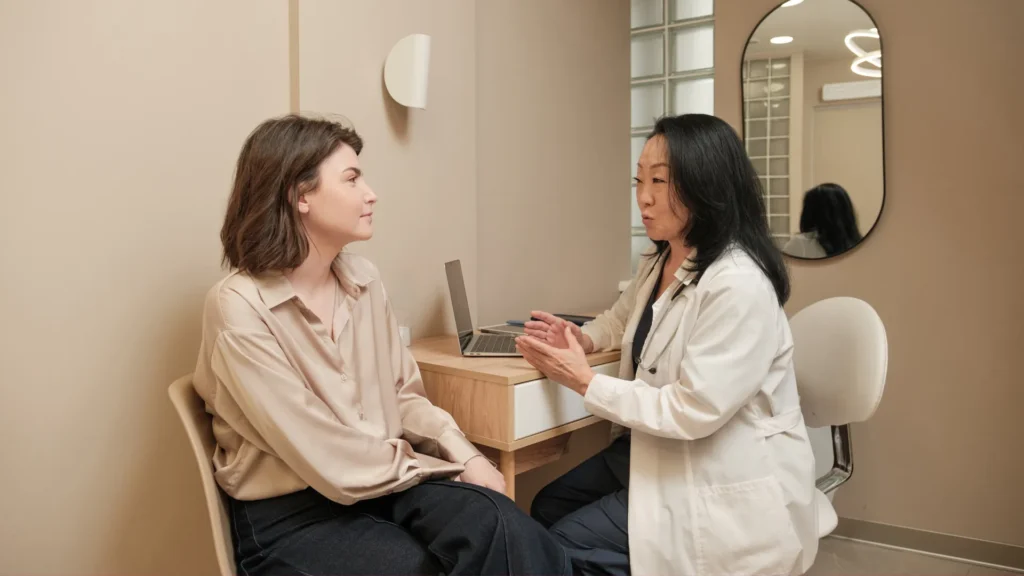
Therapy offers a confidential space to understand symptoms, process identity changes, manage stress, and develop sustainable coping skills. You do not need to wait for a crisis.
Counselling may be helpful if you are experiencing anxiety, low mood, irritability, burnout, sleep difficulties, fertility-related stress, postpartum adjustment, relationship strain, changes in confidence, or difficulty coping with perimenopause or menopause.
Therapy can help you understand what has changed, recognize patterns that may no longer serve you, reconnect with your values, and approach the next stage of life with greater clarity.
Psychotherapy for Women’s Mental Health at Vital Physiotherapy & Wellness
At Vital Physiotherapy & Wellness, counselling and psychotherapy are part of an integrated approach to women’s health. Our therapists understand that physical health, mental health, relationships, the nervous system, and lived experiences are closely connected.
Chantal Simms, MSW, RSW is a Registered Social Worker and Psychotherapist with more than 15 years of clinical experience. She supports women through perimenopause, menopause, postpartum adjustment, mood changes, caregiver burnout, and the relationship and identity shifts that can arise during midlife. Her evidence-based approach includes Cognitive Behavioural Therapy, Emotionally Focused Therapy, Internal Family Systems, and mindfulness-based therapies.
Sarah Fiorini-Taylor, RP is a Registered Psychotherapist with a focused interest in fertility care, including IVF and pregnancy loss. She works with individuals and couples navigating anxiety, grief, relationship strain, and the uncertainty that may arise before, during, and after fertility treatment.
Together, Vital’s therapists provide compassionate, personalized support for women and couples navigating major life transitions. Therapy is collaborative and adapted to each person’s experiences, needs, and goals.
A New Chapter, Not a Loss of Yourself
You are not meant to remain exactly the same person throughout your life.
Major transitions- becoming a mother, raising children, navigating perimenopause, and entering menopause- reshape us in meaningful ways. At times, these changes can feel disorienting or overwhelming. They can also offer an opportunity to reconnect with yourself, redefine your priorities, and enter the next stage of life with greater intention.
The goal is not necessarily to return to who you were before motherhood or menopause. It is to integrate your experiences, make room for every part of your identity, and grow into the next version of yourself.
If you are navigating motherhood, fertility, postpartum adjustment, caregiving, perimenopause, menopause, or another significant life transition, counselling can offer a place to feel understood and supported.
Book a counselling or psychotherapy appointment with Vital Physiotherapy & Wellness to find support that fits your needs. You do not have to navigate this chapter alone.
References
- Ekelöf, K., Tangen, G. A., Nyström, C. D., Löf, M., and Thomas, K. (2025). Mental wellbeing during pregnancy and the transition to motherhood: an explorative study through the lens of healthcare professionals. BMC Pregnancy and Childbirth, 25, 803.
- Wolak, J. E., Letourneau, N., and Hayden, K. A. (2025). Perinatal Depression Research Trends in Canada: A Bibliometric Analysis. Psychiatry International, 6(3), 86.
- Mathijssen, J. J. P., Dirks, E., and van Bakel, H. J. A. (2024). Transition to Motherhood: Adverse Childhood Experiences, and Support from Partner, Family and Friends. Maternal and Child Health Journal, 28, 1242–1249.
- Ou, C. H. K., Hall, W. A., Rodney, P., and Stremler, R. (2022). Correlates of Canadian mothers’ anger during the postpartum period: a cross-sectional survey. BMC Pregnancy and Childbirth, 22.